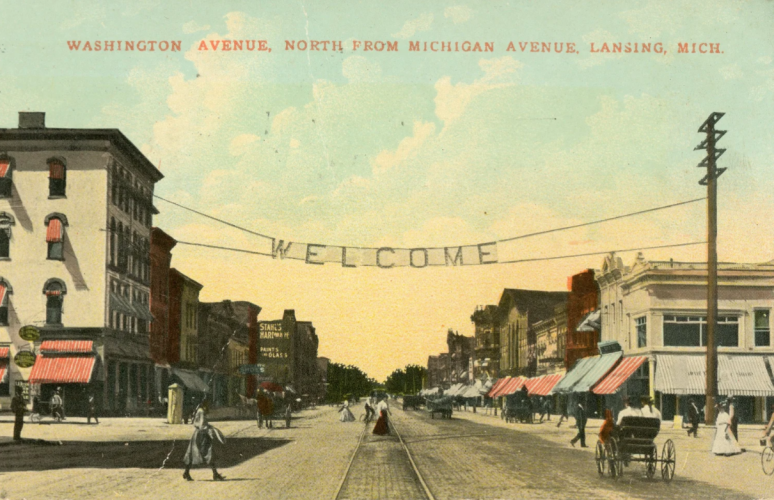
Downtown Lansing is more than the center of Michigan’s Capital City. It is where the city began, grew, and continues to change. From government landmarks to long-standing buildings, Downtown Lansing tells the story of Michigan’s past and present.
Where Lansing Began
Lansing became Michigan’s Capital in 1847. At the time, the area was mostly farmland and woods. Leaders chose Lansing because of its central location. As state government moved in, the downtown area began to take shape.
The Grand River helped early settlers travel and move goods. Today, it still runs through downtown and remains a key part of the city’s history and layout.
The Michigan State Capitol
The Michigan State Capitol is the most well-known historic building in downtown. Completed in 1879, it features a cast-iron dome and detailed interior artwork. It is one of the oldest state capitol buildings in the country that is still used for government without major additions. The Capitol grounds continue to serve as a gathering place for public events and civic activity.
In 2018, the Michigan State Capitol Commission officially greenlit the construction of Heritage Hall, a 40,000 square foot, $40 million visitor and events center. Constructed from 2019-2022, Heritage Hall provides much-needed space for educational tours, exhibits, events, and meetings. Its long-term use ensures the better preservation of the historic Capitol building by relieving its worst daily pressures.
Notable Historic Buildings Downtown
Several other historic buildings help define Downtown Lansing:
- Knapp’s Centre opened in 1937 as a modern department store and became a downtown shopping landmark for decades. Today, the building has been redeveloped for new uses while keeping its historic exterior.
- The Ottawa Street Power Station, built in 1939, once provided electricity and steam to downtown buildings. The former industrial site has since been transformed into a mixed-use development.
- The Strand Theatre Building, constructed in the early 1900s, reflects downtown’s entertainment history. It once hosted live performances and films and remains part of the area’s historic streetscape.
- The Michigan Library and Historical Center, while newer than many downtown buildings, connects visitors to the state’s history through archives, exhibits, and research collections.
Streets That Tell a Story
Washington Square and Capitol Avenue were once busy commercial corridors filled with offices, shops, and theaters. Many of the buildings along these streets date back to the late 1800s and early 1900s. Some have been restored and repurposed into housing, restaurants, and offices.
This blend of historic structures and modern activity shows how downtown continues to adapt while honoring its past.
A Living Downtown
Historic Downtown Lansing is still changing. Older buildings are finding new life, and public spaces continue to bring people together. Murals, events, and cultural spaces add new chapters to the downtown story.
Walking through downtown offers a clear view of Lansing’s history in motion. From the Capitol to long-standing buildings along Washington Square, Downtown Lansing remains a place where the past and present meet.
Photo Credit: Historical Society of Greater Lansing